
The Internal Ticker
dissonance in the marketplace

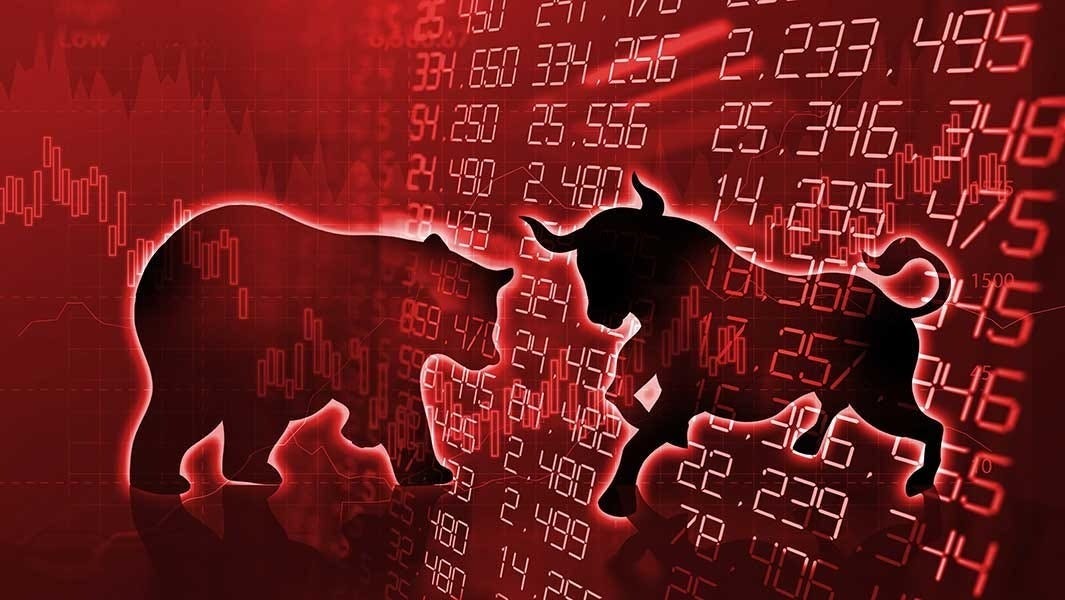
I have a hedged bet against the fall of humanity. Just in case this society still stands in 50 years, I’ve consolidated a significant amount into the stock market. “Make your money work for you,” they said. “This is the pathway to wealth,” they said. Why then, is my intuition so bearish?
I’ve been told (behind the veil) that investing is how you transcend “rich.” Put your money into things that accrue value. Assets, not liabilities. This is the lexicon for amassing generational wealth. These insights all came after over a decade of stacking funds in a savings account. Growing up, that was the conventional wisdom. Don’t stash your cash in a piggy bank or under your mattress or in your suit pockets. Put it in a savings account or bonds or a CD; it’ll gain interest. While this was, and still is, true, banks only tease 3-5% interest rates. Take into account all their underwritten fees and charges and it’s not much of a deal. Have you ever heard of dividends though? If you find a stable stock with high dividends then you’re way better off. I (of course) didn’t always know this.

I started investing in 2017 after hearing murmurs of its benefits. At that time, I needed an initial seed amount of $3,000 to start (Note: saving money is important). This was a front-end commitment. Though I was infinitely ignorant of how to invest, I took a leap. Spoiler Alert: it paid off. That year I started from $3,000 as an amateur. I set aside money from each paycheck and invested it instead of saving. Even still, my strategy was basic- let it sit. My account served as an alt savings with higher interest potential. I won some money but lost more. At that point I didn’t understand the difference between realized and unrealized gain/ loss. Though I wasn’t checking my account daily, whenever I noticed a decline, I felt the inclination to withdraw. I actualized my losses. I also didn’t understand volatility, risk management or investing styles. The brokerage I used offered private management (for a fee), but my primary interest was in learning the skill. So I lost. And I lost. And I lost. Until I learned to win… some.
In 2020, during the global pandemic, I took those surplus stimmy checks and flipped ‘em. I invested in a course1 so I could learn the foundations of the market. Then I invested in a more diversified portfolio. This time around I was paying attention… daily. I wasn’t just an investor; I was a day trader. I was marking trends, reading news, creating evolving watchlists, and thanks to that course, I wasn’t alone. I was part of an investing community. At the same time, I experimented with crypto and forex. I was clueless about their operations, but money was rolling in. It was during peak quarantine when I started making more informed financial moves. I began teaching investing in my math classes. I published my first book2, a poetry collection. Then, riding the high of government handouts, market gains and additional income streams, I quit my job. I wasn’t rich, but I had a wealthy mindset. I even moved from New York to New Orleans. The pandemic was a WiiiIIiiIiLllLLLlD time.
I’ve been investing over 8 years now and despite being a small-time retail investor, stocks (specifically) have sustained me in several periods of uncertainty. Realized gains have covered emergency situations. They’ve financed me in stints of unemployment. They’ve even paid for international trips. The stock market has both held me up and held me down. Still, ever since I was exposed to the market, and its inner workings, there’s been an internal dissonance. Have you ever heard of BlackRock? How about Viacom? If it wasn’t clear before, it’s definitely apparent now. We’re living in an oligarchy where the wealthy elite are pulling strings at whim. Just this week I read an article in which Palantir’s CEO Alex Karp said AI “will destroy humanities jobs.”3 I’ve invested in that.
Here’s a freshly minted opinion: my desire to turn a profit has made me complicit in legalized exploitation and dehumanization. Stocks are steadily rising, even as the world burns and here I am, a self-identifying anti-capitalist, shoveling more coal in the fire. Let me be clear: I am not a communist or an anarchist, but I strongly believe in prioritizing people over profit. My ideal society is communal. Yet I write these words in an era when capitalist cannibalism is commonplace. I remember pointing out to that aforementioned investing community that a certain watchlist stock bankrolled prison labor. This factor was enough to keep my money out, but what of my little drop in a massive ocean? And what of the companies with similar motives who deal in the dark? The stock market is a machine that feeds a larger beast. In modern times, what even is a moral institution? Can they authentically operate and be profitable? Are they sustainable? And as for me, have I consented to the Amerikan dream with my dollars?
Let me be clear: I am not a communist or an anarchist, but I strongly believe in prioritizing people over profit. My ideal society is communal.
Here’s what I definitively know: Money is expendable, people are not. FULL STOP.
I wanna divest from the lie and yet… I can’t. Not fully, at least. I can’t because at my core, I simultaneously recognize that I don’t want to be a slave to a 9-5. This means that until I have an entrepreneurial venture that can sustain me, stocks are my best call. Linger the dissonance. I started this entry not knowing where it would land, and now I find myself at a crossroad. I’ve made several financially detrimental decisions in the past for the sake of ethics. I retreated from Tesla after Elon showed his true colors. I unloaded my Jumia shares because I believe neocolonialism threatens African ingenuity and entrepreneurship. #OneAfrica I’m staying out of Spotify because they support ICE. I suppose this, then, is my present compromise- be a more informed consumer. But again, what is a moral institution, and where do I draw the line? For starters I’m selling all my Amazon stock.
I know that money doesn’t buy happiness and it certainly doesn’t buy freedom, but it does buy comfort, and as someone who’s experienced the lower rungs, I rebuke living a life of lack. I remember back in college being presented with the Ghandi quote “Live simply so that others may simply live.” I quickly integrated it into my minimalist mentality, and yet poverty is not my path. As I affirm every morning, “I am an abundance magnet. The money cometh.” This thought-piece was (in part) inspired by a recent Ava Duvernay post, where she posed the question, “What happens when I stop playing games I don’t believe in?”4 Well, it seems I’m not quite there yet. For now, I am playing the game but on different terms.
Current Resolve: Invest with ethical intention. Make informed and aligned money moves.
The Cycle of Capitalism
1 - Dominique Broadway’s Wealth De.mys.ti.fied course
2 - My first book, Die or Live Trying
3 - MSN article covering the World Economic Forum
4 - Ava Duvernay’s Substack article- I’m Not Selling This
P.S. The irony isn’t lost on me that I linked to Amazon to buy my own book…
